

The stick and the pedals











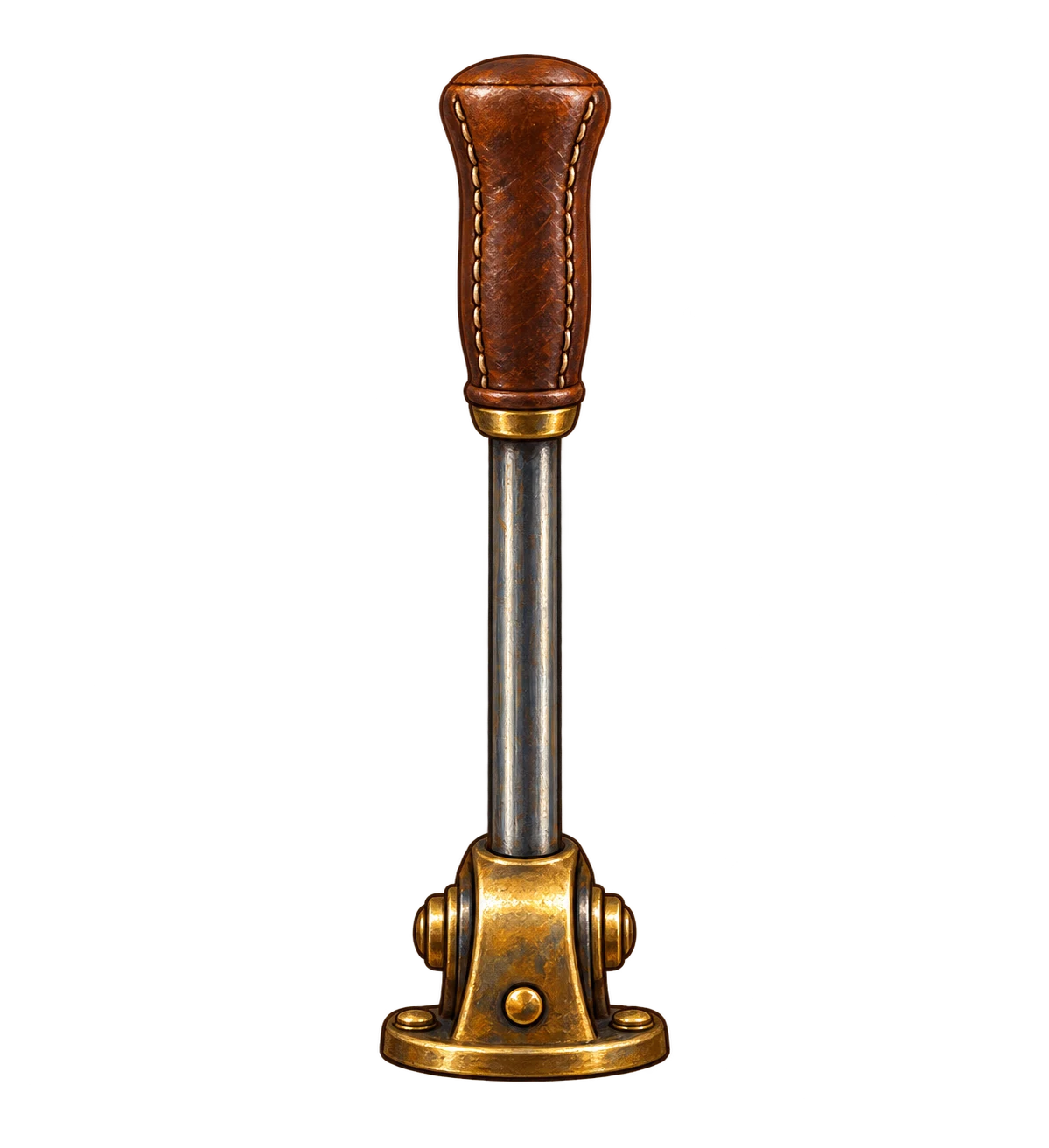
Control stick
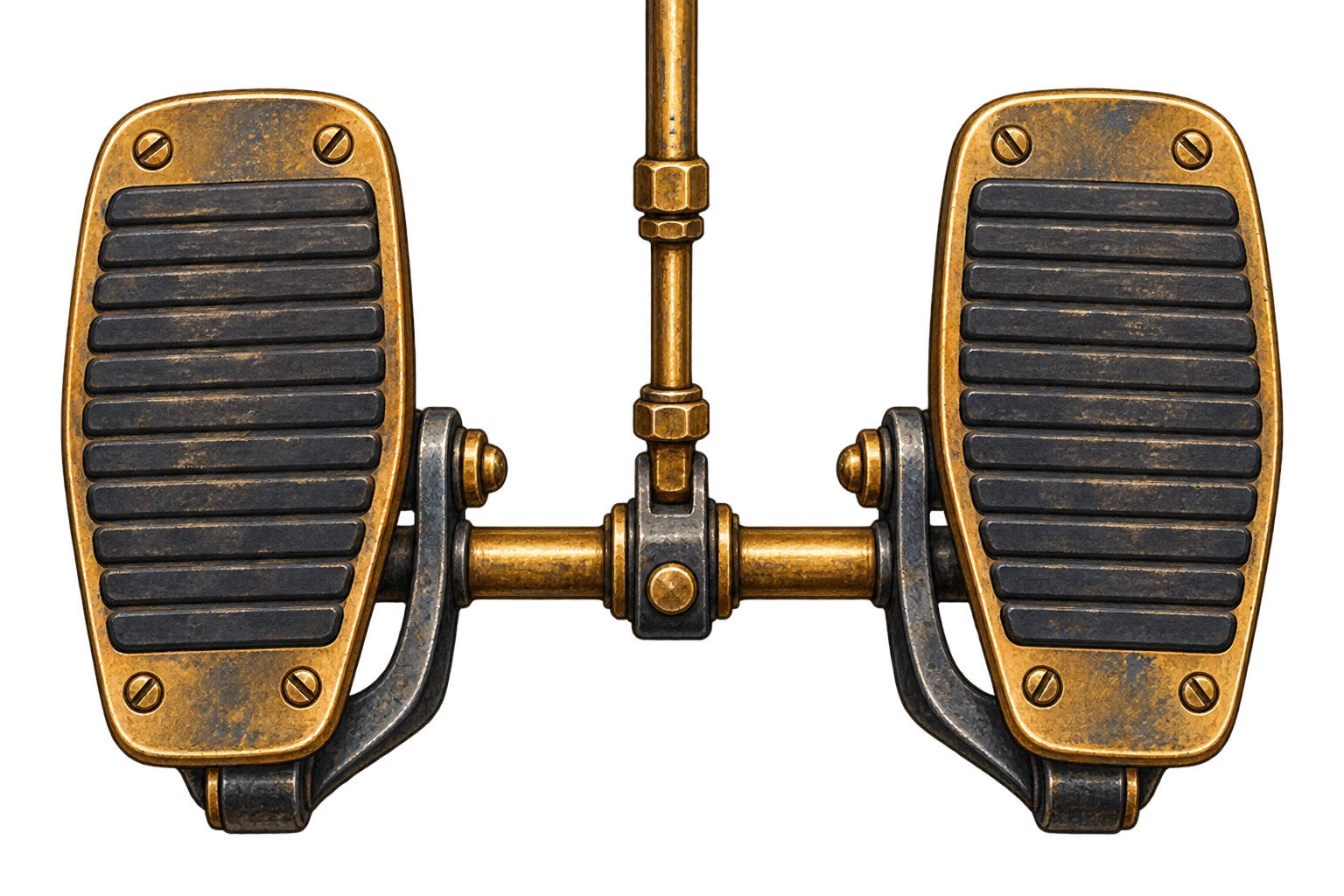
Rudder pedals
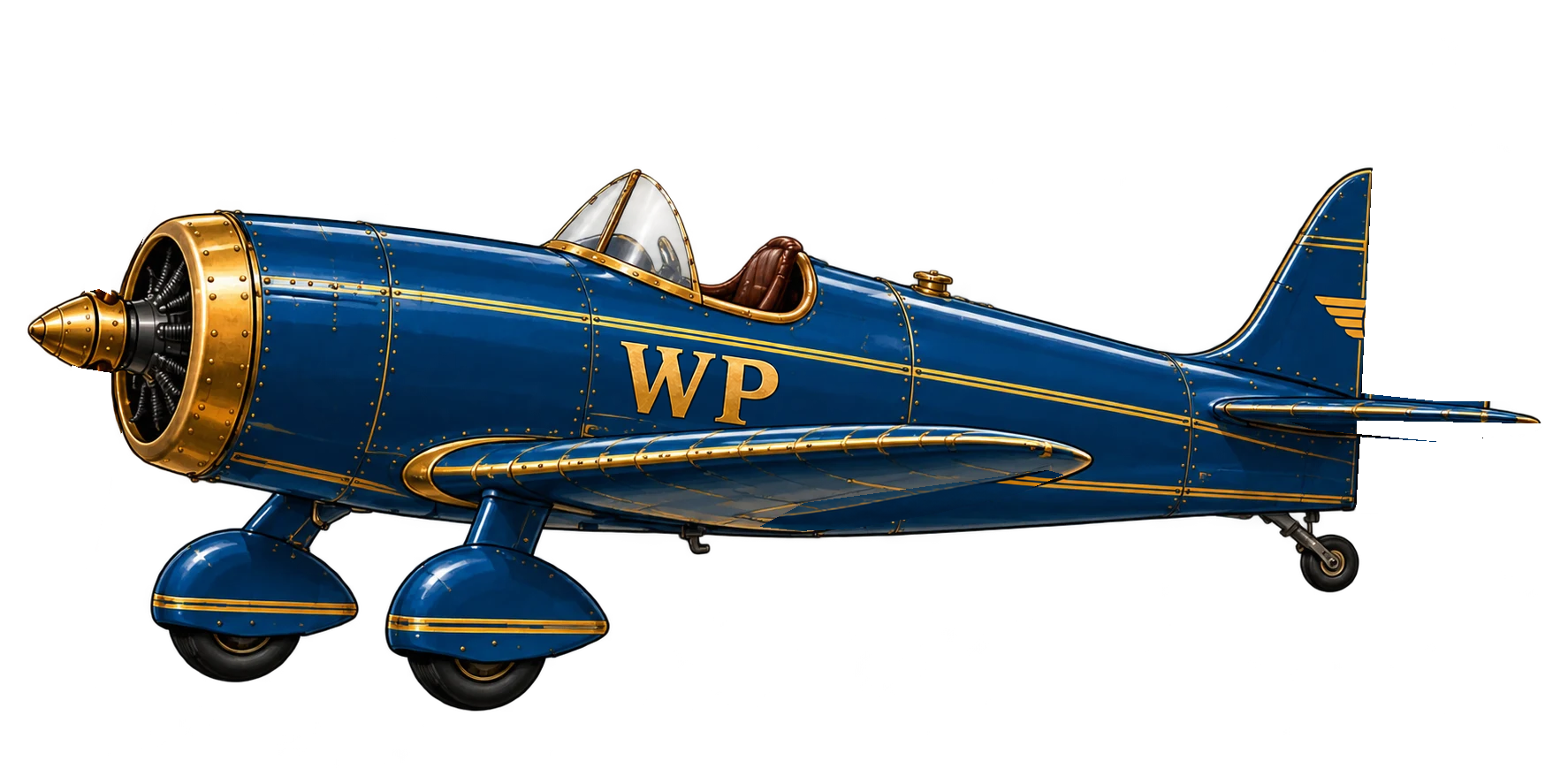
- Everything is level: the aeroplane flies straight on.
Checked against the FAA Pilot’s Handbook of Aeronautical Knowledge (FAA-H-8083-25C), Ch. 6 Flight Controls, pp. 6-3, 6-5 and 6-8, and Ch. 5, pp. 5-12 to 5-13 and 5-22 to 5-23.
What the stick and the pedals do
- Stick left: the left aileron goes up, the right one down, and the aeroplane rolls to the left.
- Stick right: the right aileron goes up, the left one down, and the aeroplane rolls to the right.
- Stick back: the elevator goes up and the nose points up, ready to climb.
- Stick forward: the elevator goes down and the nose points down, ready to dive.
- Left pedal: the rudder swings left and the nose swings left.
- Right pedal: the rudder swings right and the nose swings right.
- Stick and pedal together: a smooth turn.
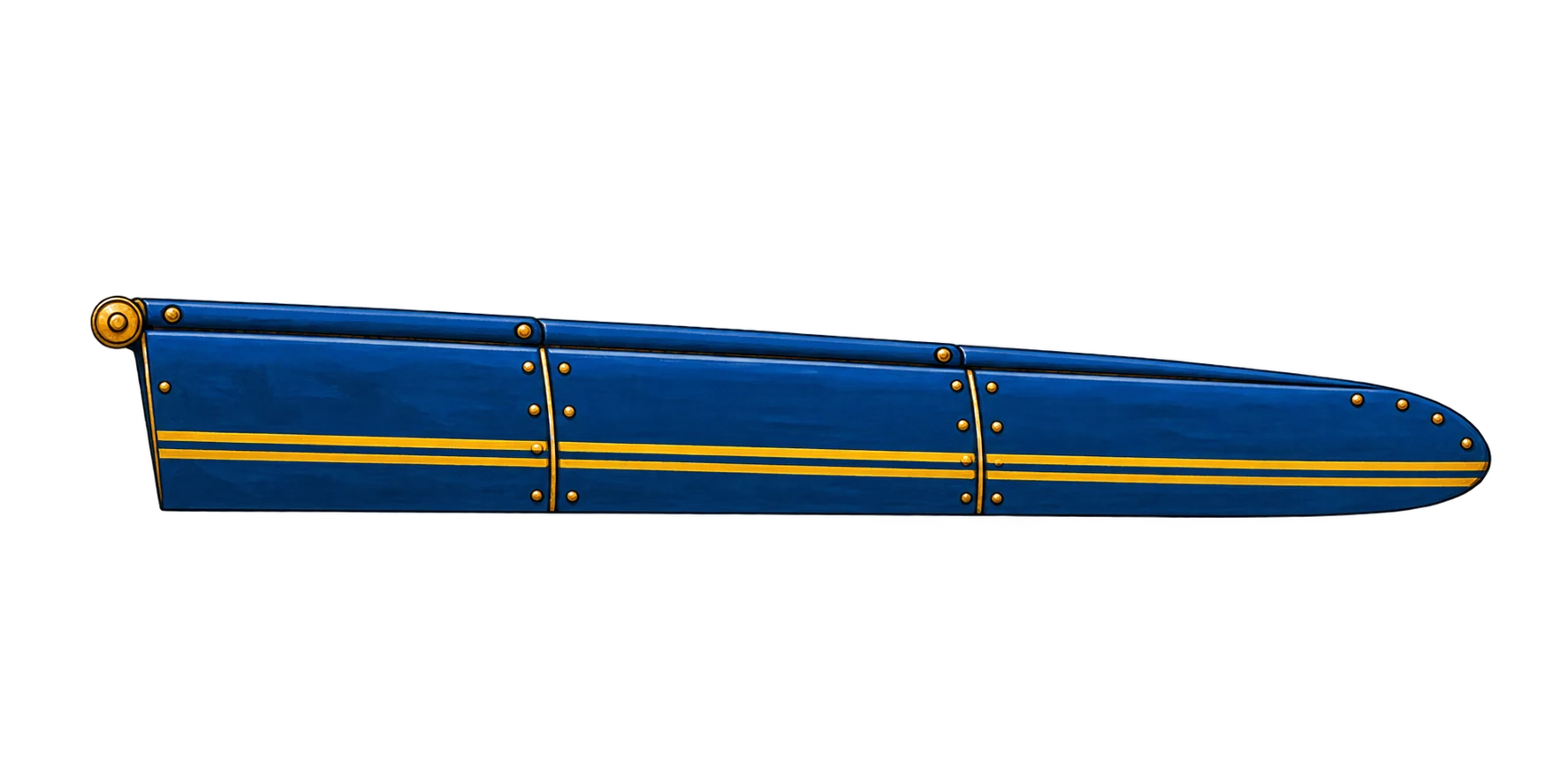
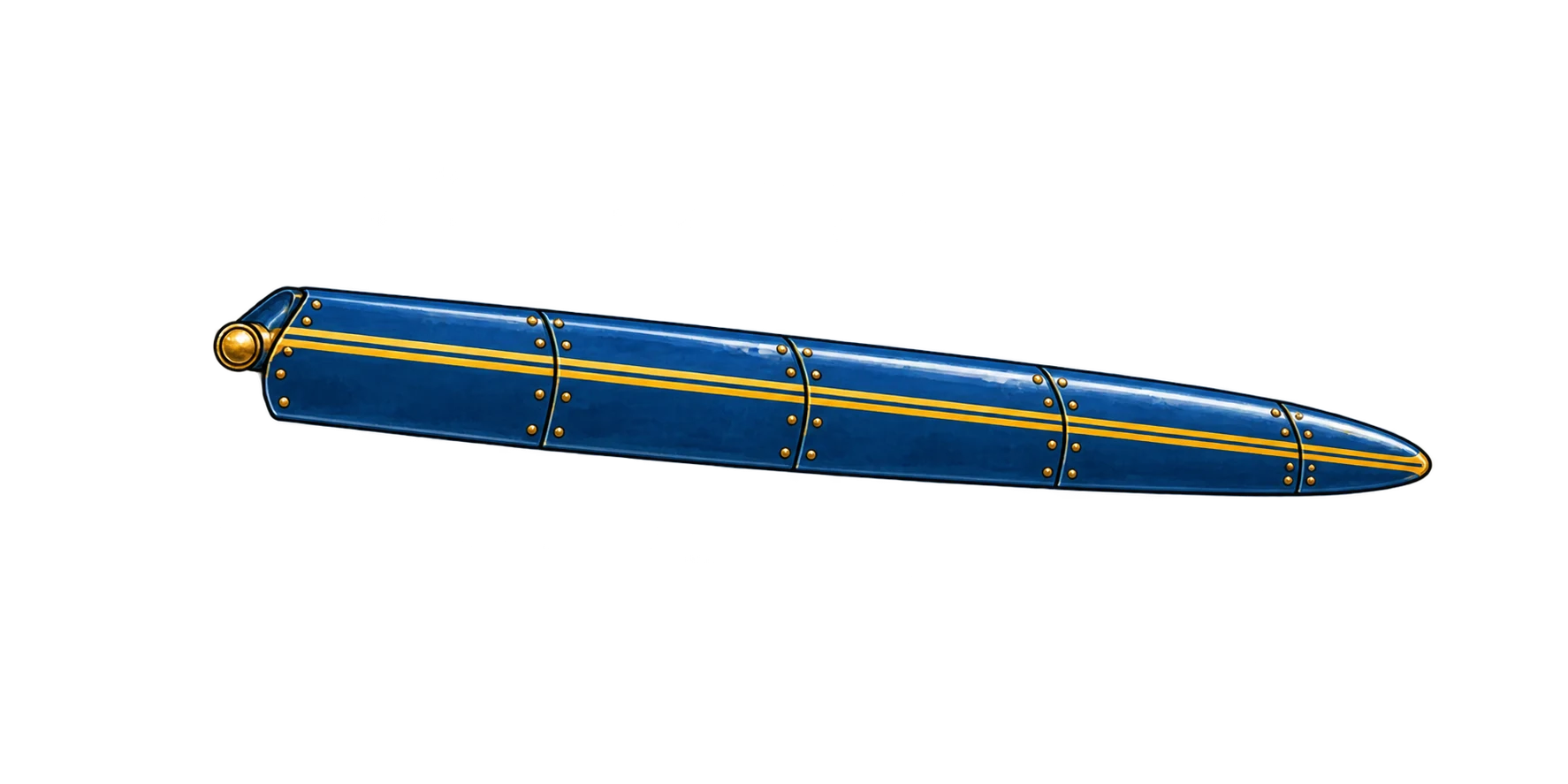
Aileron
The aileron is the little flap at the back of the wing, near the tip, and when one goes up the other goes down to tip the wings.
Ailerons roll the aeroplane about the line from nose to tail. Tipping the wings is what turns an aeroplane in the air.
Checked against: FAA Pilot's Handbook of Aeronautical Knowledge (FAA-H-8083-25C), Ch. 6 Flight Controls, Ailerons, p. 6-3; Ch. 5, Aerodynamics of Flight, Turns, p. 5-22.
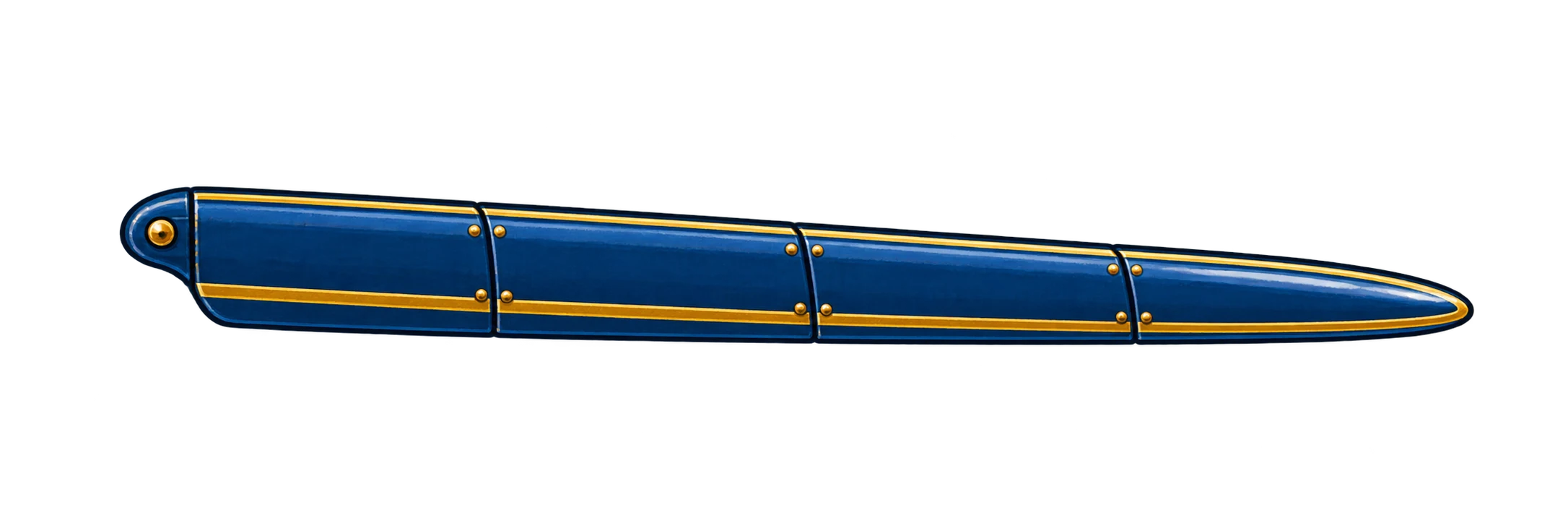
Elevator
The elevator is the hinged flap at the back of the tailplane, and tilting it points the aeroplane's nose up or down.
It controls pitch. Whether the aeroplane then climbs also depends on the engine's power and the speed.
Checked against: FAA Pilot's Handbook of Aeronautical Knowledge (FAA-H-8083-25C), Ch. 3 Aircraft Construction, Empennage, p. 3-6; Ch. 6 Flight Controls, Elevator, p. 6-5.
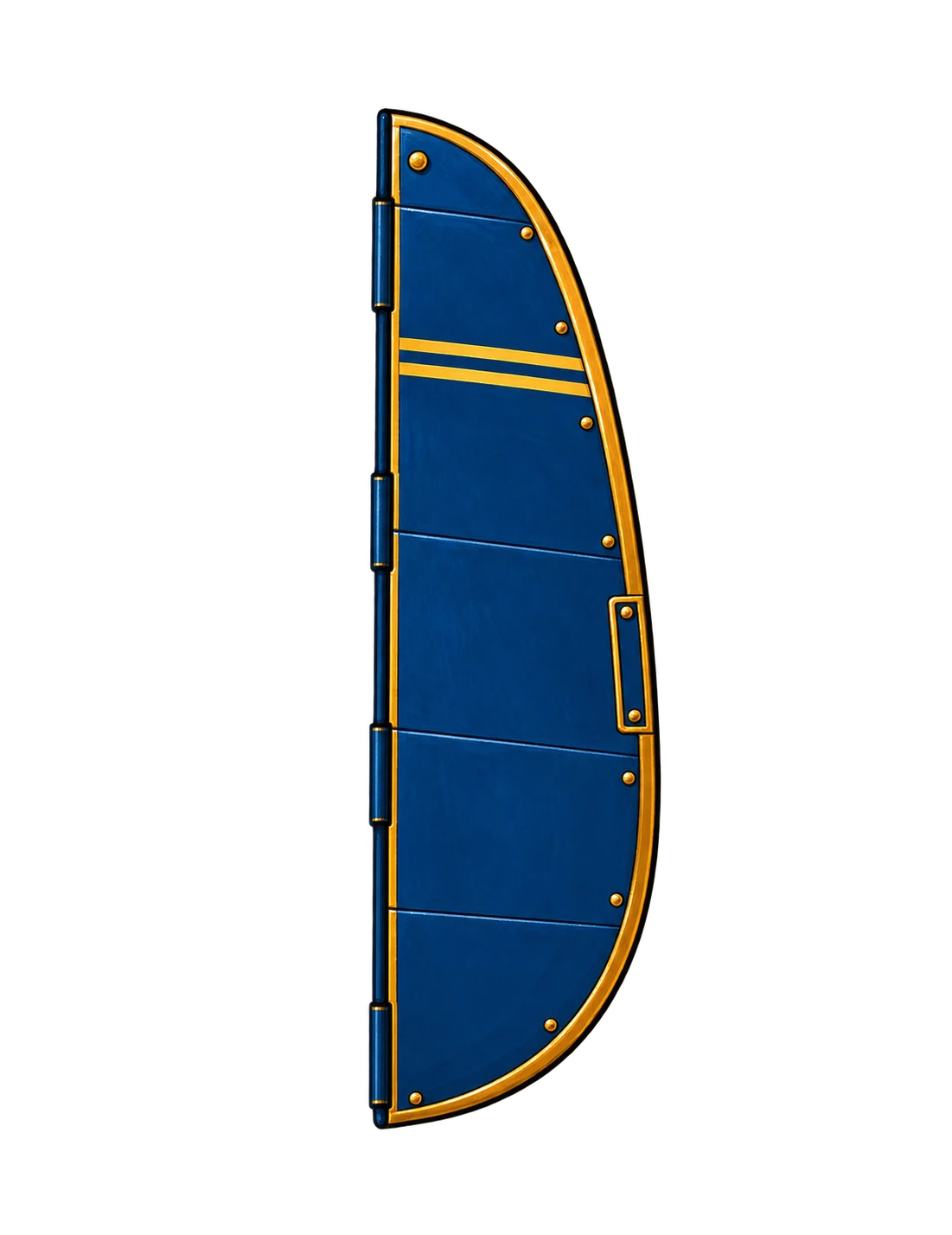
Rudder
The rudder is the flap at the back of the fin, and it swings left or right to swing the aeroplane's nose left or right.
It yaws the nose. On its own it does not turn the aeroplane in the air: the pilot tips the wings to turn and uses the rudder to keep the turn smooth. On the ground the pedals steer.
Checked against: FAA Pilot's Handbook of Aeronautical Knowledge (FAA-H-8083-25C), Ch. 6 Flight Controls, Rudder, p. 6-8; Ch. 5, Turns, pp. 5-22 to 5-23.
The sentences above are checked against the FAA Pilot’s Handbook of Aeronautical Knowledge (FAA-H-8083-25C), Ch. 6 Flight Controls, pp. 6-3, 6-5 and 6-8, and Ch. 5, pp. 5-12 to 5-13 and 5-22 to 5-23.