

Why do pilots watch the horizon?
Because it is the steadiest thing in the sky: where the horizon sits in the windscreen tells a pilot at a glance whether the aeroplane is level, climbing, diving or turning.
 Open this chapter in the storybook
The short version
The horizon is the line where the sky seems to meet the land or the sea, and for a pilot it is the most useful line in the world, because it never moves. Fly level and it sits still across the windscreen. Raise the nose and the horizon drops lower in the window; lower the nose and it rises. Tip the wings and the horizon tilts.
So the first thing a new pilot learns is not a dial at all. It is where the horizon should sit in the window, and how to keep it there. When the sky is clear, pilots flying by sight spend most of their time looking out, not down.
How far away it is
The horizon is really the edge of what you can see around the curve of the Earth, so the higher you are, the further away it is. Standing on a beach, it is about five kilometres off. From a small aeroplane a kilometre up, on a very clear day, it is more than a hundred kilometres away. From an airliner high above the clouds, it is nearly four hundred.
When the horizon disappears
Cloud, fog and darkness can hide the horizon completely, and then something strange happens: a person’s body cannot tell which way is up. The balance sense in your inner ear, which does a fine job on the ground, is easily fooled in the air, and a slow, gentle turn can feel exactly like flying straight.
That is why every cockpit has an artificial horizon, a small dial with a picture of the sky and the ground on it, and why pilots are taught to trust it over their own feelings (the rest of the dials).
Listening, too
Pilots of the old open-cockpit aeroplanes used to say they could hear their speed: the wind hummed in the wires between the wings, higher as they went faster and lower as they slowed down. Pilots still listen. A steady engine note, like a steady horizon, means the flight is going the way it should.
In the story
Everything above is what real pilots do. This part is Little Blue’s world.
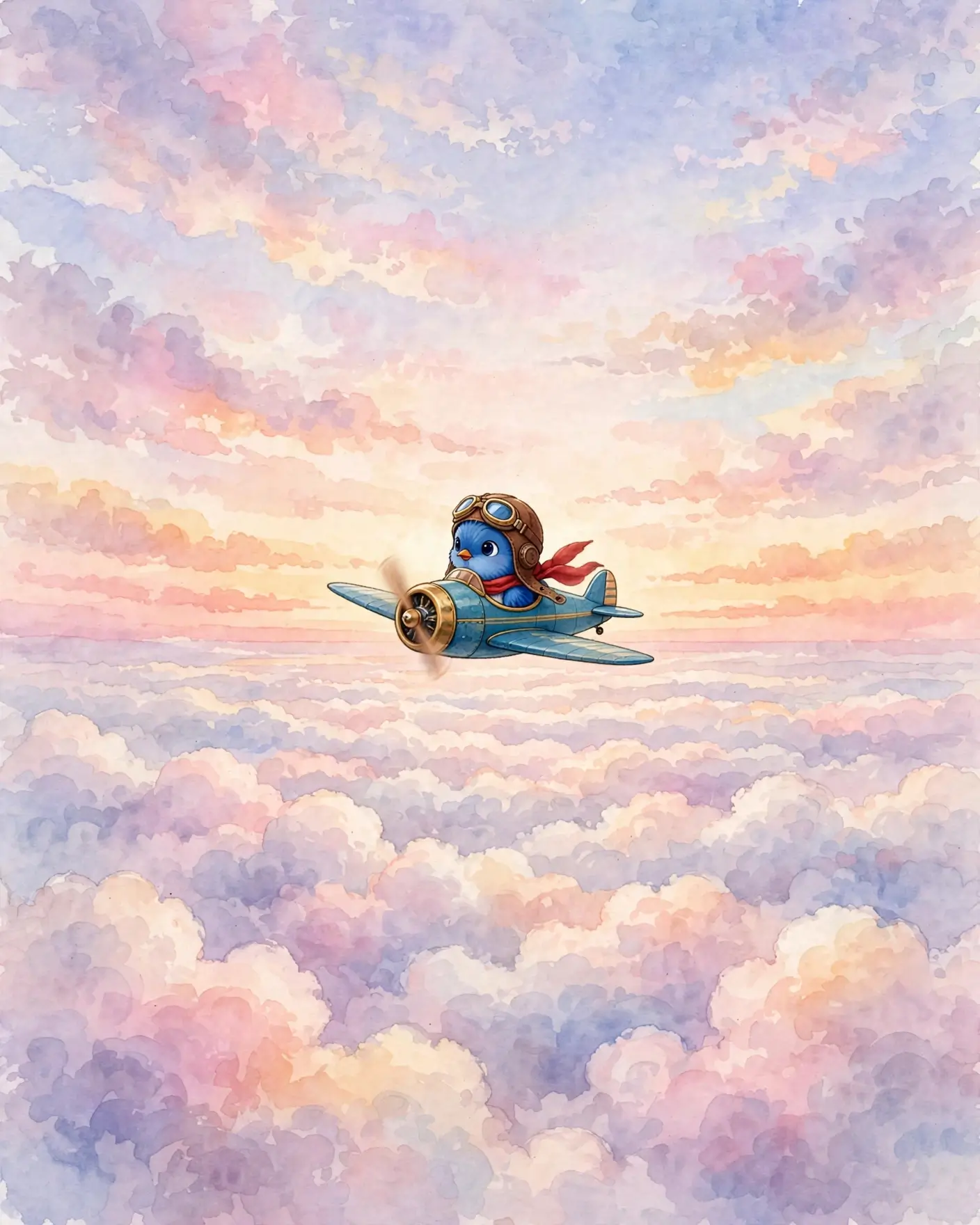
Chapter six is the quietest page in the book. One afternoon there is nothing in the sky but Little Blue and “the horizon stretching forever,” and at first the quiet worries him. Then he learns to listen, and the book says what he finds: “Sometimes silence does not mean you are lost. Sometimes it means you are right where you need to be.”
A pilot would know that afternoon. A level horizon and a quiet, steady sky are what flying feels like when it is going well. Higher Than the Clouds finds the same stillness after the storm: I didn’t know that free could feel this quiet.
Three words to keep
- Horizon: the line where the sky seems to meet the land or the sea.
- Attitude: a pilot’s word for which way the aeroplane is pointing: nose up or down, wings level or tipped.
- Visibility: how far you can see through the air. On a hazy day it can be much less than the distance to the horizon.