

How does a pilot hold a line in the wind?
When the wind pushes an aeroplane sideways, the pilot points it a little into the wind, so that it still travels straight along the line they chose.
 Open this chapter in the storybook
The short version
An aeroplane flies through the air, and the air itself is moving. When the wind blows from the side, it carries the aeroplane sideways the whole time, the way a river carries a swimmer downstream. Point the nose straight at where you want to go and you will slide off to one side and miss it.
So pilots point a little into the wind instead. The aeroplane goes along slightly crabwise, its nose aimed a touch upwind, and the wind’s push and the aeroplane’s angle cancel each other out. The nose points one way; the aeroplane travels along the line the pilot chose. That is holding a line.
Reading the wind
Pilots find out about the wind before they fly, from the forecast and the windsock, and work out roughly how far to point into it. Then they check it against the ground. If the road or river they are following starts sliding off to one side, the wind is pushing harder than they thought, and they turn a little further into it. It is a small correction, made again and again: reading the wind, not fighting it.
You can see birds do the same on a windy day. A bird crossing the wind often points slightly into it and goes along a little sideways, like a crab.
Tip a wing
Close to the runway, many pilots switch to another way of doing it. They lower the wing on the side the wind is coming from, so the aeroplane slides into the wind just enough to cancel it, and they use the pedals to keep the nose pointing straight down the runway. A landing in a side wind is often flown with one wing low, all the way down to the ground.
In the story
Everything above is what real pilots do. This part is Little Blue’s world.
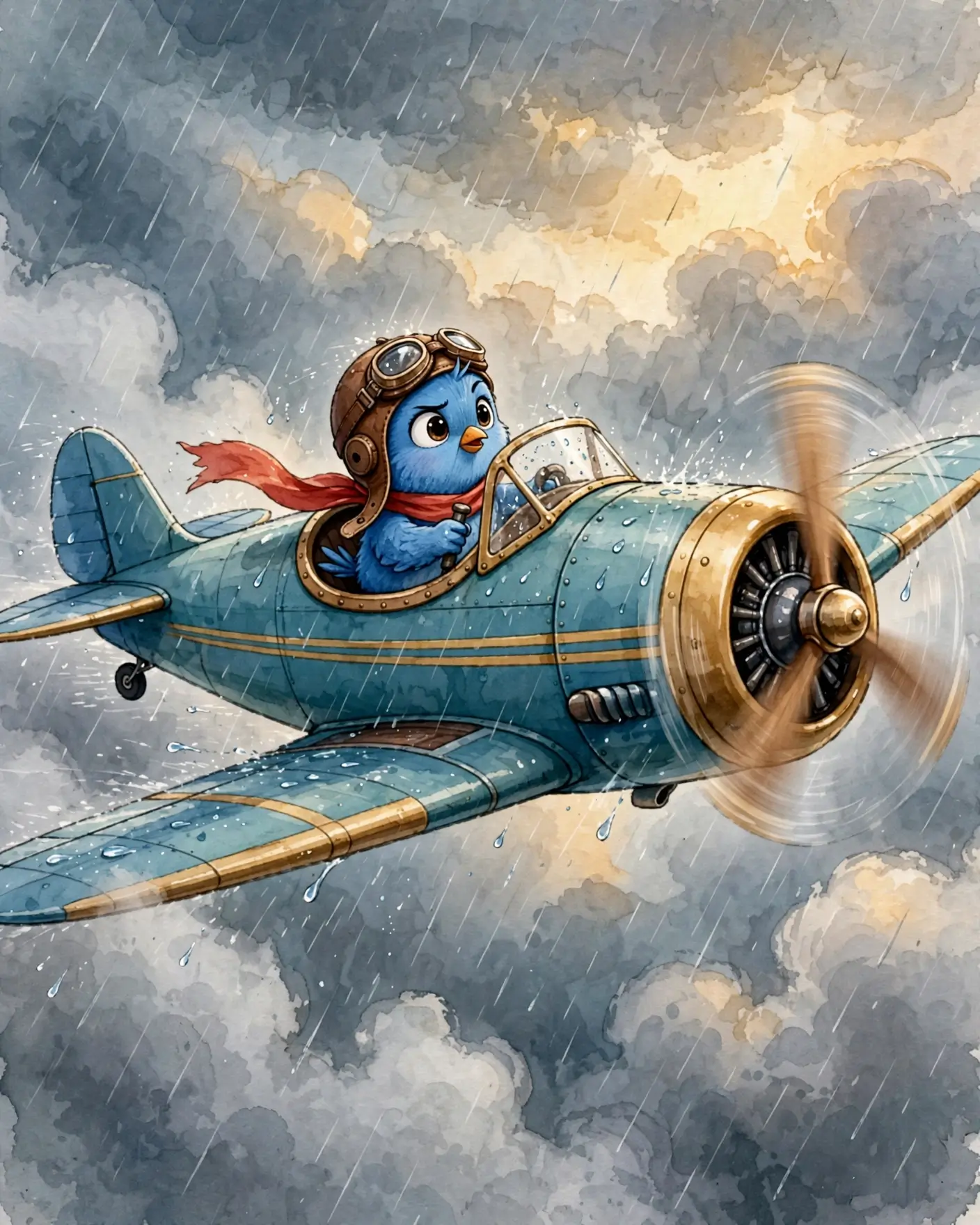
In chapter eight the storm is all around him, and Little Blue’s first instinct is to fight it. Then he thinks better of it, and the book says what he does instead in three short lines a pilot would recognise: “He feels which way to lean. He holds his line. He moves with the wind when he needs to.”
That is a side wind handled the way pilots handle one: not by pointing harder at the goal, but by leaning into the push until the line holds. Read the Storm sings it as its chorus, feel which way to lean, tip a wing, hold your line, and its crew has a friend named after it: Hold the Line held tight.
Three words to keep
- Crosswind: wind blowing across your path, from one side.
- Drift: being carried sideways by the wind.
- Heading and track: your heading is where the nose points; your track is where you actually go. Holding a line means keeping the track, whatever the heading has to be.
The wind from behind, and the wind from in front: what is a tailwind?