What is a tailwind? A little pilot's guide
A tailwind is wind moving in the same direction you are travelling — it comes from behind and pushes you along.
 Open this chapter in the storybook
The short version
Wind is air on the move. If the air is moving the same way you are, it comes from behind you — from your tail — and gives you a push. That is a tailwind. If it is coming towards you, it pushes against your nose the whole way, and that is a headwind. Wind from the side is a crosswind, which is the one that makes hats fly off.
You can feel the whole idea on a bicycle on a breezy day. Pedal one way and it is oddly easy; turn round to come home and every push of the pedals seems to count for less. Nothing changed about you or the bicycle. The air changed sides.
What a tailwind does to an aeroplane
An aeroplane flies through the air — and the air itself is going somewhere. So an aeroplane has two speeds at once: how fast it moves through the air, and how fast it moves over the ground. With a tailwind, the ground speed is the bigger one, and the same flight takes less time and less fuel. With a headwind it is the other way round.
High up, there are rivers of very fast wind called jet streams. Airliners crossing the Atlantic from America to Europe ride one, which is why that flight is usually shorter than the flight back. Birds know the trick too: geese and swallows on a long journey wait for a wind that is going their way.
Why a pilot checks it before every flight
Because it changes everything about the trip: how long it will take, how much fuel to carry, and which way to point the aeroplane at the start. Every airfield has a windsock, the striped cloth cone on a pole. It fills with wind and points the way the wind is going, so a pilot can read the wind from the far side of the field.
Here is the surprise. A tailwind is a gift once you are up and cruising, but aeroplanes take off and land into the wind — into a headwind. A wing needs air flowing over it to lift, and a headwind hands it that air for free: the aeroplane is flying while it is still going quite slowly over the ground, so it needs less runway, and it comes back down more gently. So the pilot checks the windsock, taxis to the end of the runway the wind is blowing from, and turns to face it.
In the story
Everything above is true of any aeroplane. This part is Little Blue’s world.
In Tailwind (Up, Up, Up), the friends who arrive are called the Tailwind gang, and one of them — Wind Reader — is the one who checks the sky. The chorus refuses to fight the wind at all: you don’t paddle, you don’t push, you let the happy wind decide. Which is the whole lesson of a tailwind, sung: the right friends are the wind at your back.
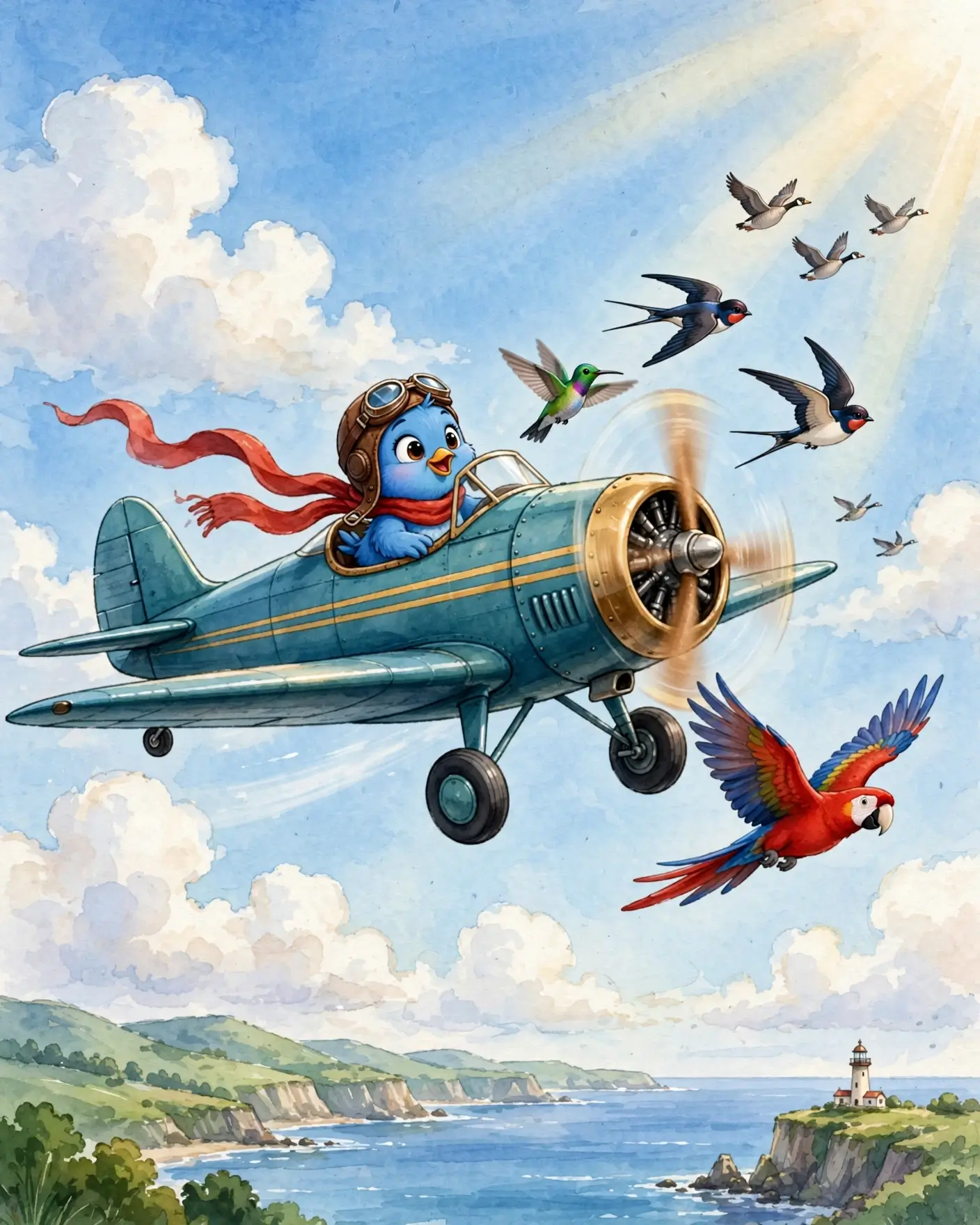
In the storybook, chapter three is the same discovery from above the coast. A swallow zips, geese glide in a V, a hummingbird hovers in place — and none of them fly the same way. Little Blue learns there is no single right way to move through the sky. There is only your way.
Three words to keep
- Tailwind — wind from behind, pushing you along.
- Headwind — wind from in front, pushing back. The one you take off into.
- Windsock — the striped cone at the airfield that shows which way the wind is going.
More of the words pilots use, as they turn up in the songs: Little Blue’s flying words.