How does a wing hold anything up?
A wing is shaped and tilted so that, as it moves, it pushes air downwards, and the air pushes the wing up. That push is called lift.
 Open this chapter in the storybook
The short version
Air feels like nothing at all, but it is made of countless tiny pieces jostling about, and together they weigh something. The air in a box one metre long on every side weighs a little more than a bag of sugar.
A wing is built to use that. It is tilted up slightly at the front, and usually curved on top, so as it moves forward it throws air downwards behind it. Push air down, and the air pushes back up. That upward push is called lift, and it is the only thing holding a bird or an aeroplane in the sky.
Try it
Hold a strip of paper just under your bottom lip, so it droops down in front of your chin, and blow straight out across the top of it. The paper rises. Moving air, flowing over a curved surface, is doing to the paper what it does to a wing.
Why the runway
A wing only lifts while air is flowing over it, and the faster the air flows, the harder it lifts. So an aeroplane cannot simply jump into the sky. It races along the runway until the air over its wings is quick enough to hold it up, and then, with hardly any help from the pilot, the wheels come off the ground.
It is also why pilots take off into the wind. A headwind is air already flowing over the wing before the aeroplane has gone very far, so it lifts off sooner (more about that).
Four pushes and pulls
Everything that flies is balancing four things at once. Lift pushes up, from the wings. Weight pulls down. Thrust pushes forward: a propeller, or a bird’s flapping. And drag pulls back, the air pushing against everything that moves through it. When lift matches weight and thrust matches drag, the aeroplane flies along steadily. More power and a slightly higher nose, and it climbs.
In the story
Everything above is true of every wing, a bird’s or an aeroplane’s. This part is Little Blue’s world.
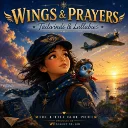
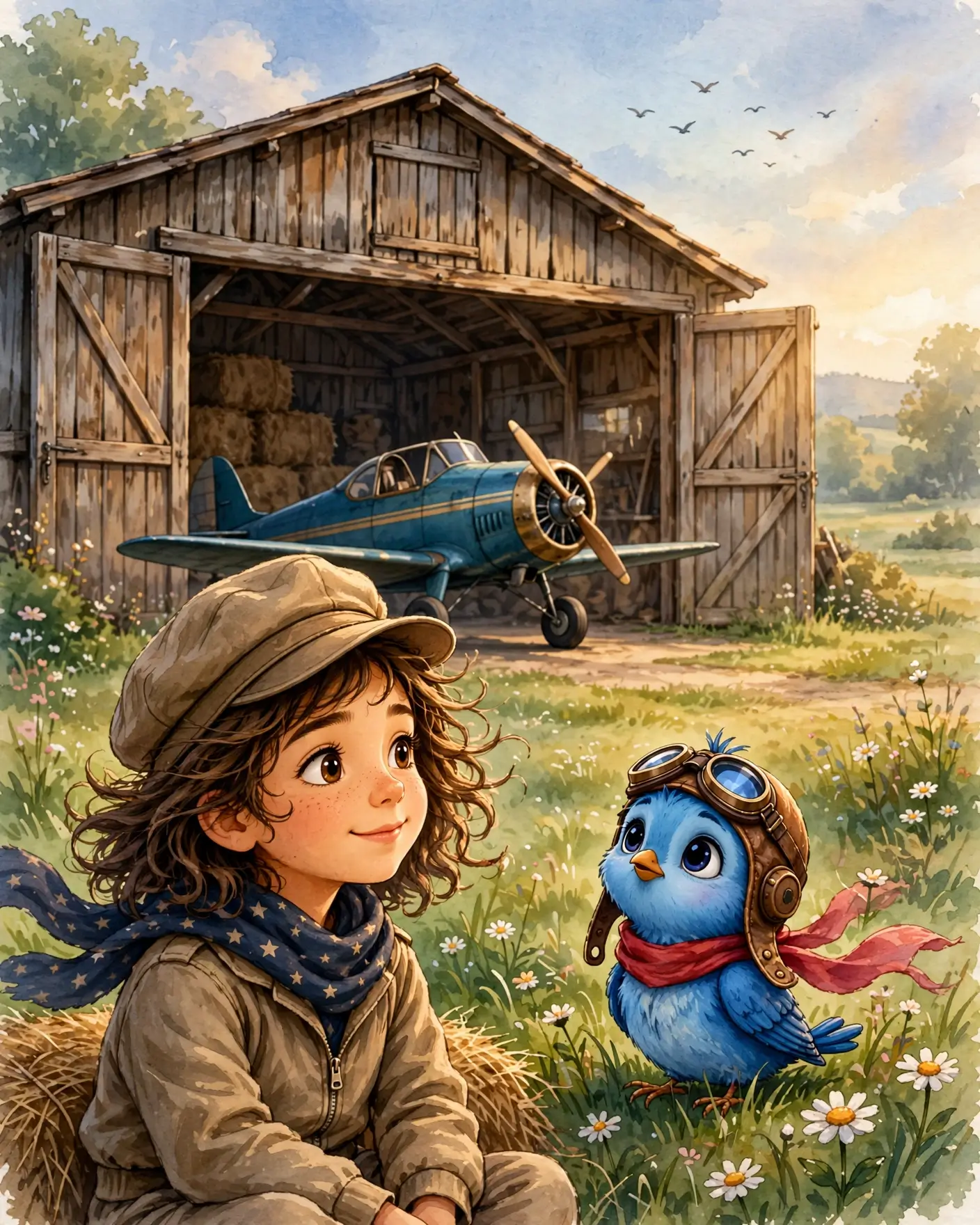
In chapter one a girl notices Little Blue watching the sky, and she does not ask him to be like the other birds. Sitting beside the old hangar, with a little aeroplane waiting in its doorway, she tells him: “You don’t have to fly like anyone else. You just have to find your own wings.”
First Wings, the song of the same name, gives a first flyer the whole of this note in two lines: spread your little wings and lean into the air. You lean into the air so the air can hold you up. And the chorus is honest about how it goes the first time: a wobble and a flap and a prayer.
Three words to keep
- Lift: the upward push the air gives a moving wing.
- Thrust: the push forward, from a propeller or a flap.
- Drag: the air’s pull backwards on anything moving through it.