
What are clouds made of?
Clouds are made of billions of tiny drops of water, or tiny crystals of ice where the air is cold enough, which form when rising air cools. And on the greyest day, the sun is still shining above them.
 Open this chapter in the storybook
The short version
Clouds are made of teeny-tiny drops of water, and sometimes little bits of ice. The air carries water you cannot see. When warm, damp air rises into the sky it cools down, and some of that hidden water turns into drops far too small to see one by one. Billions of them together make a cloud.
Some clouds look like fluffy sheep, some stretch across the sky like a blanket, and some bring rain.
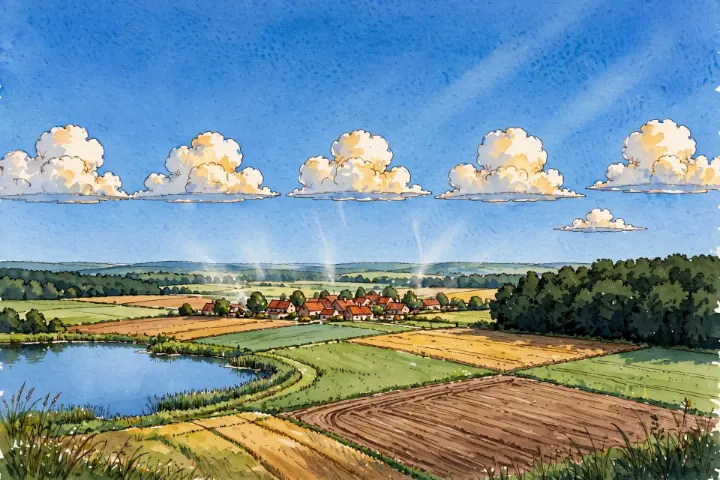
How does a cloud form?
Air always carries some water mixed into it as an invisible gas called water vapour, and warm air can hold more of it than cold air. Air cools as it rises, and when it has cooled enough, some of the vapour condenses: it turns back into liquid, the way your breath turns to mist on a cold window. Each droplet forms around a speck of dust, smoke or sea salt floating in the air, and each is so small that about fifty of them side by side would stretch a millimetre.
So a cloud is not cotton wool, and it is not smoke. It is not the water vapour either, which nobody can see: it is the droplets the vapour makes.
Cold makes ice, but not straight away. Many cloud droplets stay liquid far below freezing, which scientists call supercooled water. Only where the air is very much colder, high up, does most of a cloud turn to ice, and the highest, wispiest clouds are made of tiny crystals of ice.
Why are clouds white, and why do some look grey?
The droplets scatter sunlight in every direction, all of its colours at once, which is why a cloud looks white. A thick cloud sends so much of that light back up and out of its sides that little reaches its base, so from underneath it looks grey, and a dark grey cloud is often a deep one, full of water, that may soon rain.
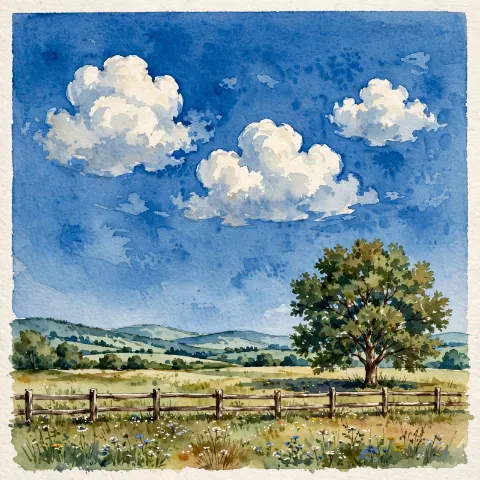
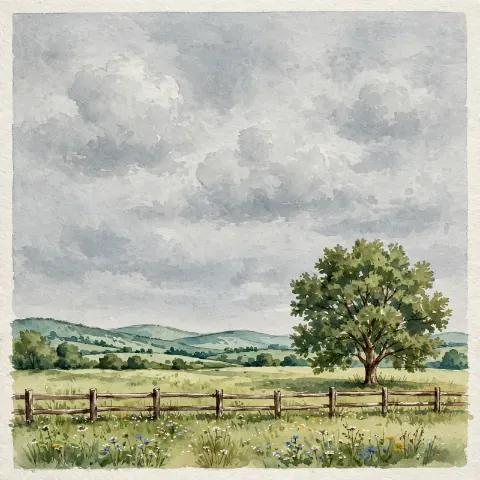
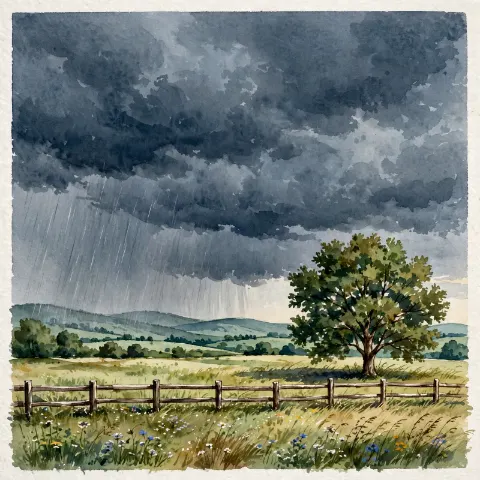
Why do some clouds look like mountains?
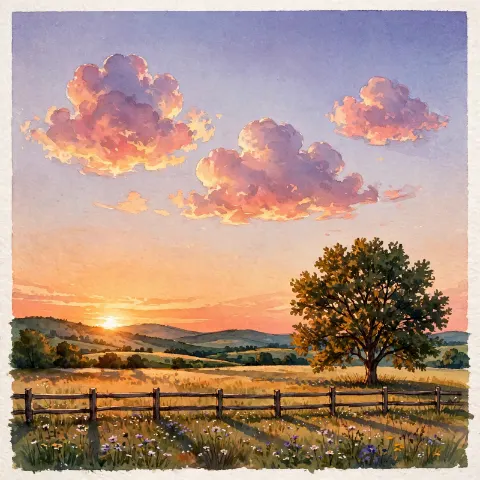
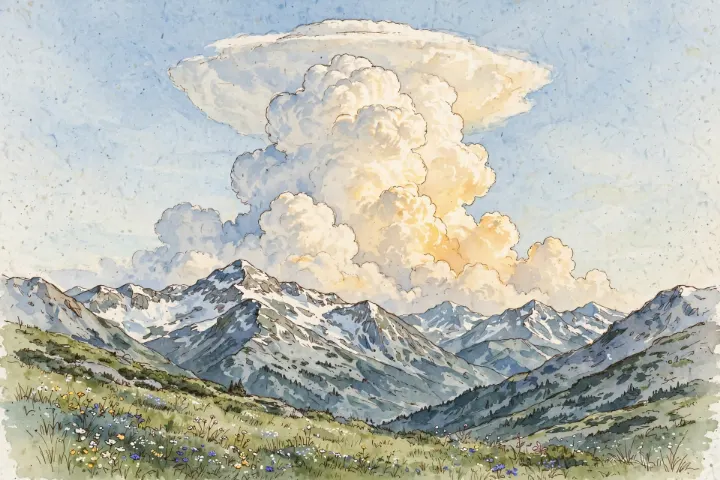
On a sunny day the ground warms up, and bubbles of warm air rise from it like bubbles in a pan of water. Where a bubble has cooled enough, a cloud forms on top of it. These are cumulus clouds, the puffy heaps (cumulus is Latin for heap), and on a warm afternoon some keep building into storm clouds that tower higher than any mountain on Earth.
How heavy is a cloud, and how does it float?
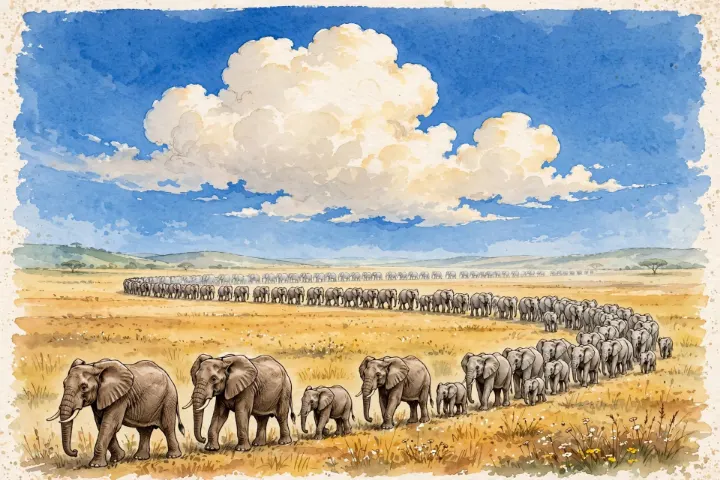
An ordinary heap cloud, about a kilometre across, holds around five hundred tonnes of water, about as heavy as a hundred elephants. It floats because the water is spread through an enormous space, in drops so small that the rising air keeps them up.
How does a cloud make rain?
Inside a cloud the droplets bump into one another and join up. It takes a million or more cloud droplets to make one raindrop, and when a drop grows too heavy for the rising air to hold, it falls. In the cold top of a big cloud, crystals of ice grow into snowflakes instead: they melt into rain on the way down, or on a cold enough day they reach the ground as snow.
Can you touch a cloud?
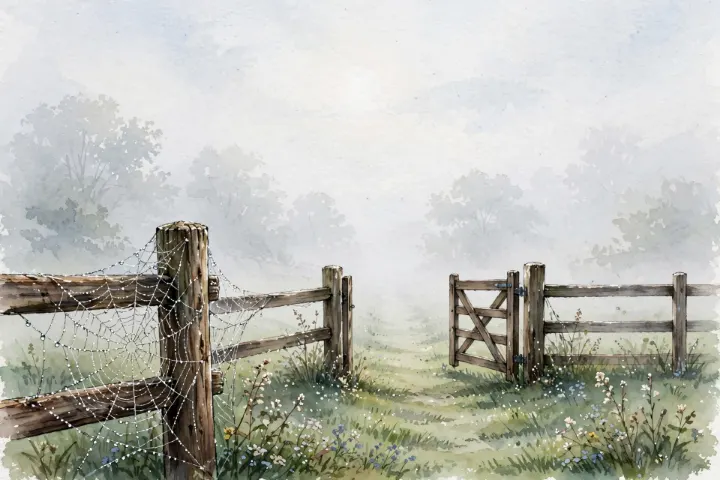
Yes, on a foggy morning. Fog is a cloud near the ground: tiny drops of water floating in the air, or, on the coldest days in the coldest places, tiny crystals of ice. Walking through fog is walking through a cloud, and it feels cool and damp on your face.
It is also why you cannot see far in fog: the drops scatter the light, just as a cloud hides what is behind it. Weather forecasters call it fog when you cannot see further than a kilometre, and in thick fog it can be less than a hundred metres. A cloud can look as soft as cotton wool, but nobody could sit on one: it would close round them like mist.
Little Blue’s cloud-spotting mission
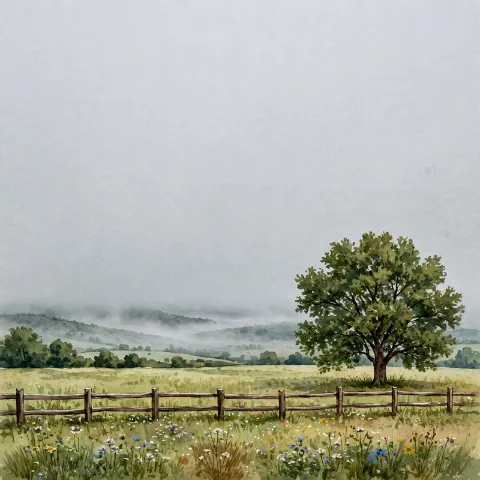
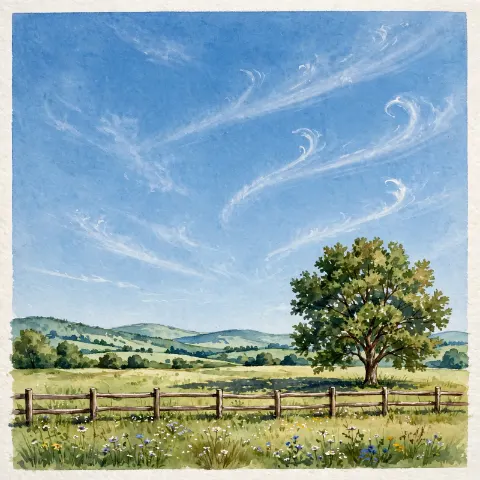
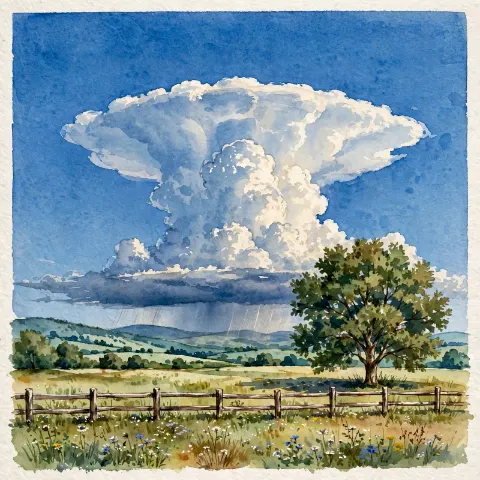
Clouds are named for their shapes, mostly in Latin. Go outside with a grown-up, look up (but never at the Sun), and see which of these you can find:
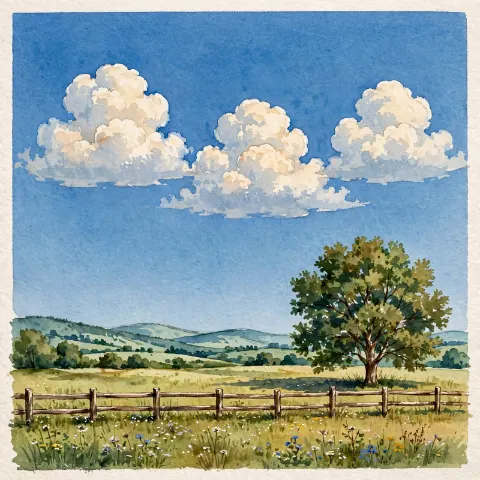
- Cumulus, the fluffy one: heaps like cotton wool or sheep, flat underneath and piled up on top. Its name is Latin for heap.
- Stratus, the blanket: a flat grey sheet that can cover the whole sky. Lying on the ground, it is fog.
- Cirrus, the feathery one: thin white wisps very high up, made of ice. Its name means a curl of hair.
- Cumulonimbus, the storm cloud: the tallest cloud of all, its top spread flat like an anvil. If you see one coming, or hear thunder, go indoors (what to do when a storm is coming).
Can you spot a fluffy cloud today? What shape does it remind you of? Watch it for a minute: is it growing, shrinking, or drifting away?
What clouds mean to a pilot
Inside a cloud a pilot may see very little out of the window: often just white or grey all round, like thick fog, with the ground, the horizon and other aeroplanes hidden. So pilots who fly by looking outside must keep clear of clouds, by distances set in the rules.
Flying inside cloud is only for pilots who are trained and qualified to fly by their instruments, in an aeroplane equipped for it, following special rules and usually guided by air traffic control. They steer by the dials, which show which way is up when the window cannot.
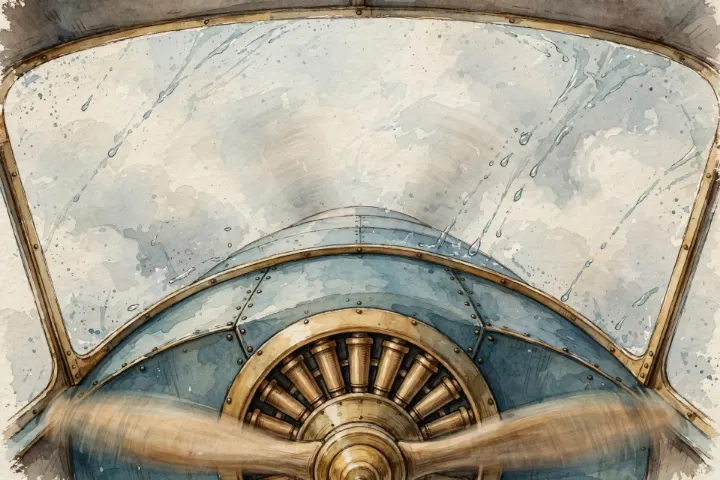
Even they keep well away from thunderstorms. The towering clouds are bumpy inside, because of the rising air that builds them, and pilots are taught to stay many kilometres from a big storm and never to take off or land as one arrives (here is what they do).
Above the grey
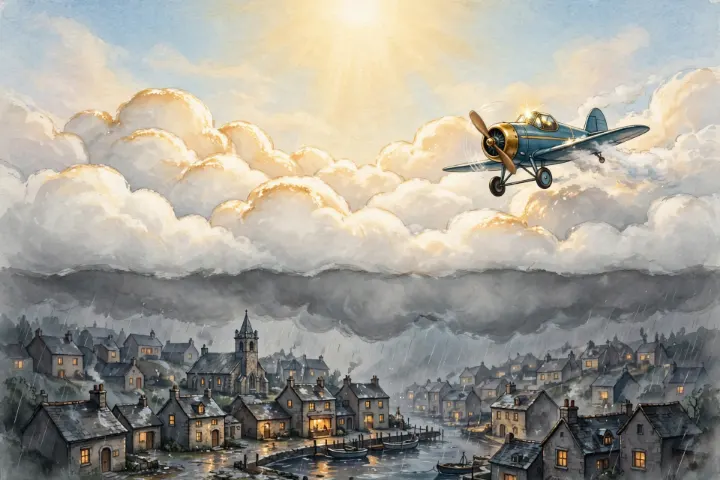
Clouds have tops. Climb up through a grey layer and you come out into sunshine that was there the whole time: on the dullest day, the sun is shining above the cloud. And from up there the fields below look like patches and the rivers like threads, because everything looks smaller the further away it is.
In the story
Everything above is true of any cloud. This part is Little Blue’s world.
In chapter four Little Blue climbs until the fields are patches below him and the clouds “rise around him like white mountains.” It is a beautiful sight, and for the first time the sky feels a little too big for a very small pilot. He breathes, and goes on up.
Higher Than the Clouds sings the other side of that climb, right through the grey into the blue, and its chorus looks down on the same small world Little Blue sees: Rivers turned to ribbons, mountains small below.
Three words to keep
- Water vapour: water as an invisible gas, mixed into the air.
- Condense: to turn from a gas into tiny drops, the way your breath mists a cold window.
- Cumulus: the heaped, puffy clouds of a sunny day.
For curious grown-ups
Where the facts above were checked:
- NASA: What Are Clouds? (opens in a new tab)
- Met Office: Why are clouds white? (opens in a new tab)
- Met Office: What is fog? (opens in a new tab)
- National Weather Service: cloud classification, and supercooled droplets (opens in a new tab)
- FAA, Aeronautical Information Manual: thunderstorm flying (7-1) (opens in a new tab)
- US rules: the instrument rating, 14 CFR 61.3(e) (opens in a new tab)
- Smithsonian National Air and Space Museum: How much does a cloud actually weigh? (opens in a new tab)
- USGS Water Science School: Precipitation and the water cycle (millions of droplets to a raindrop) (opens in a new tab)