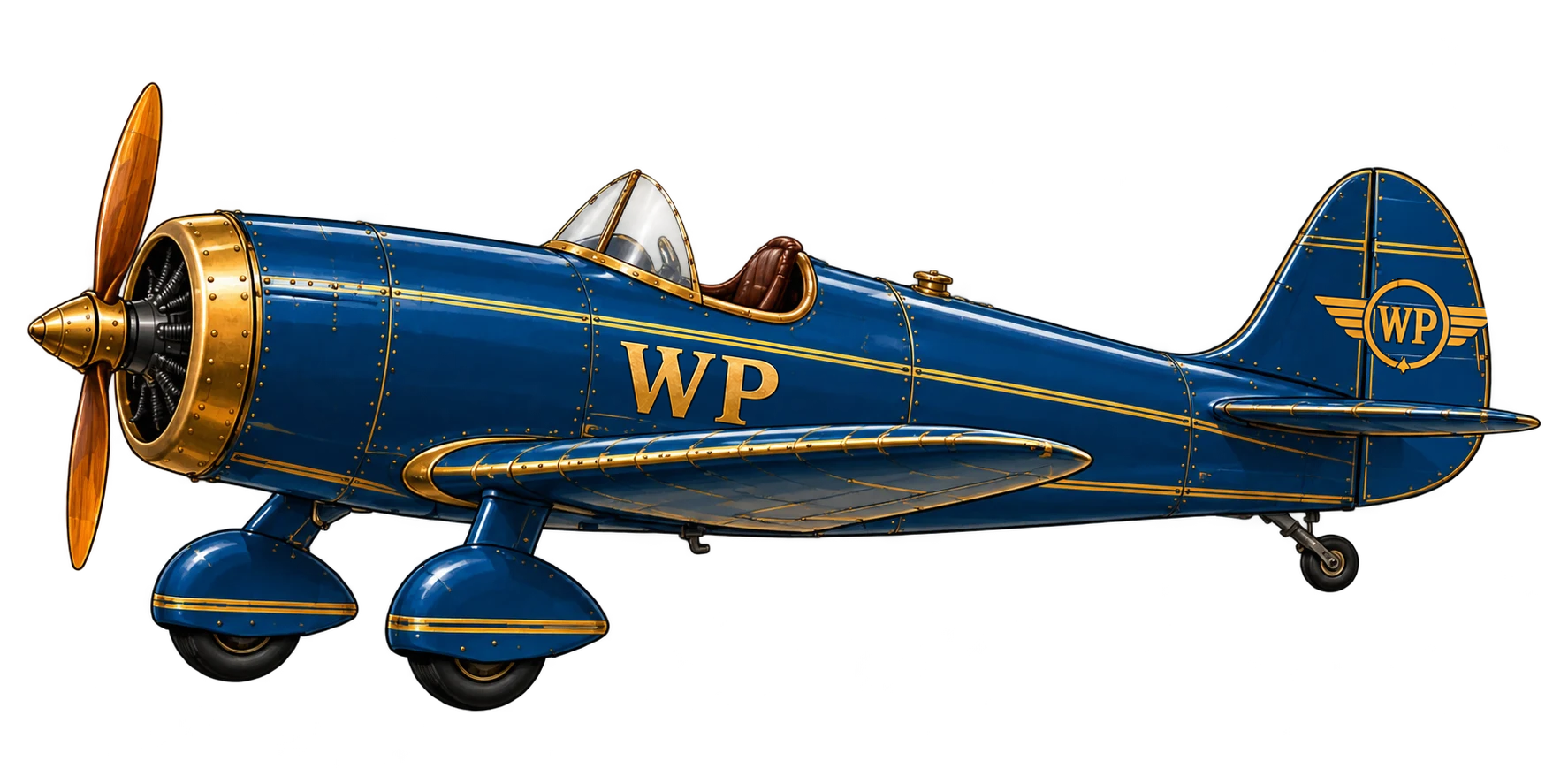
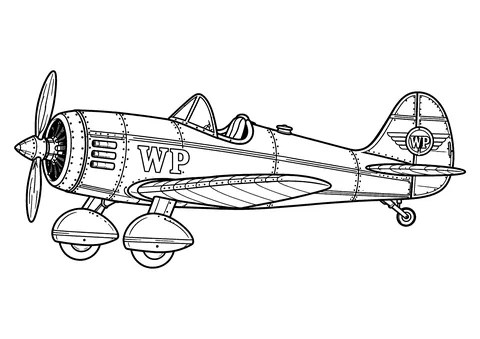
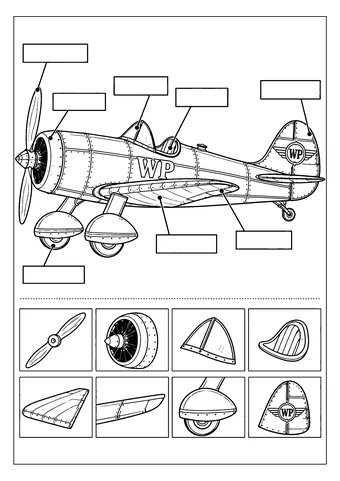
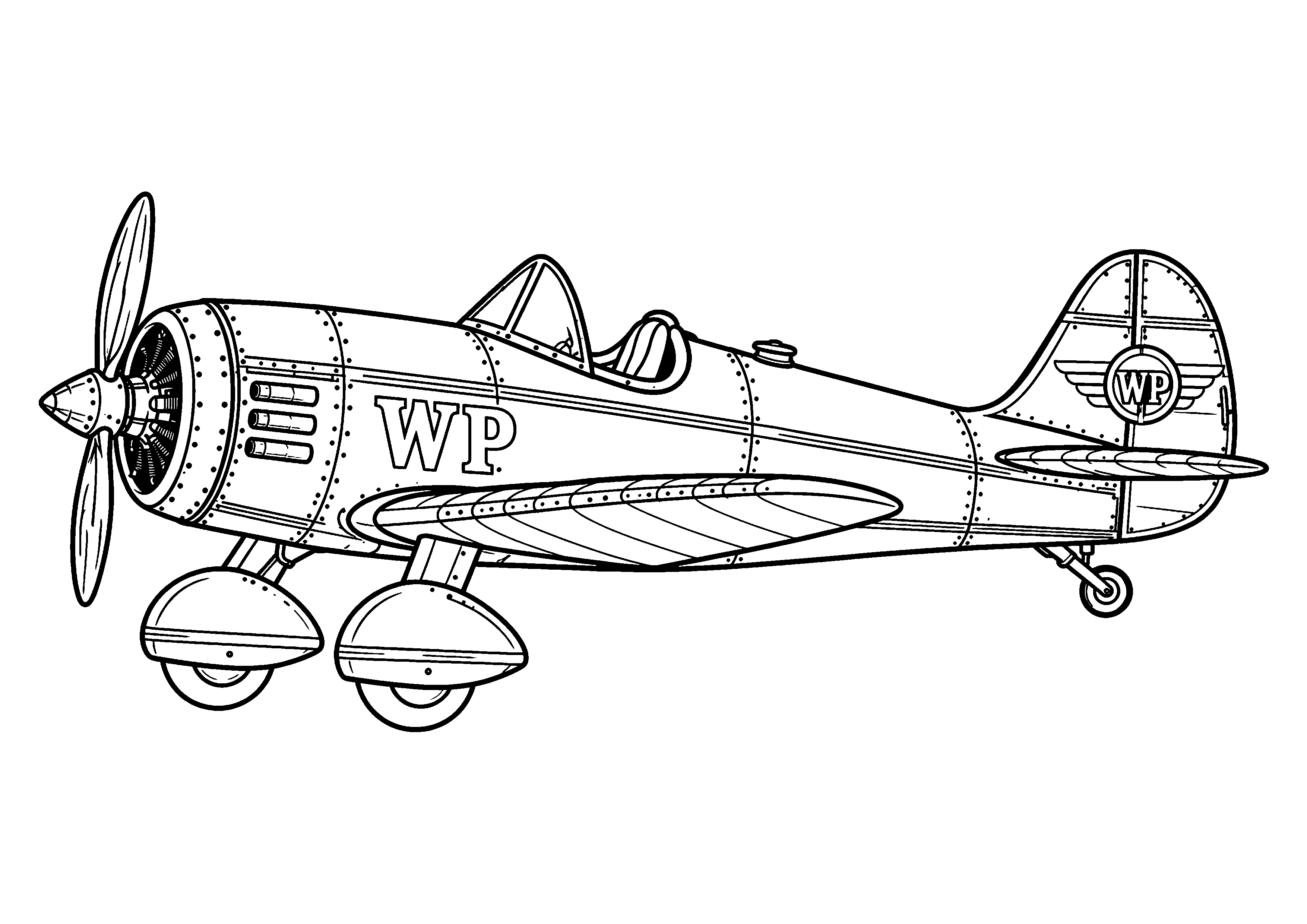
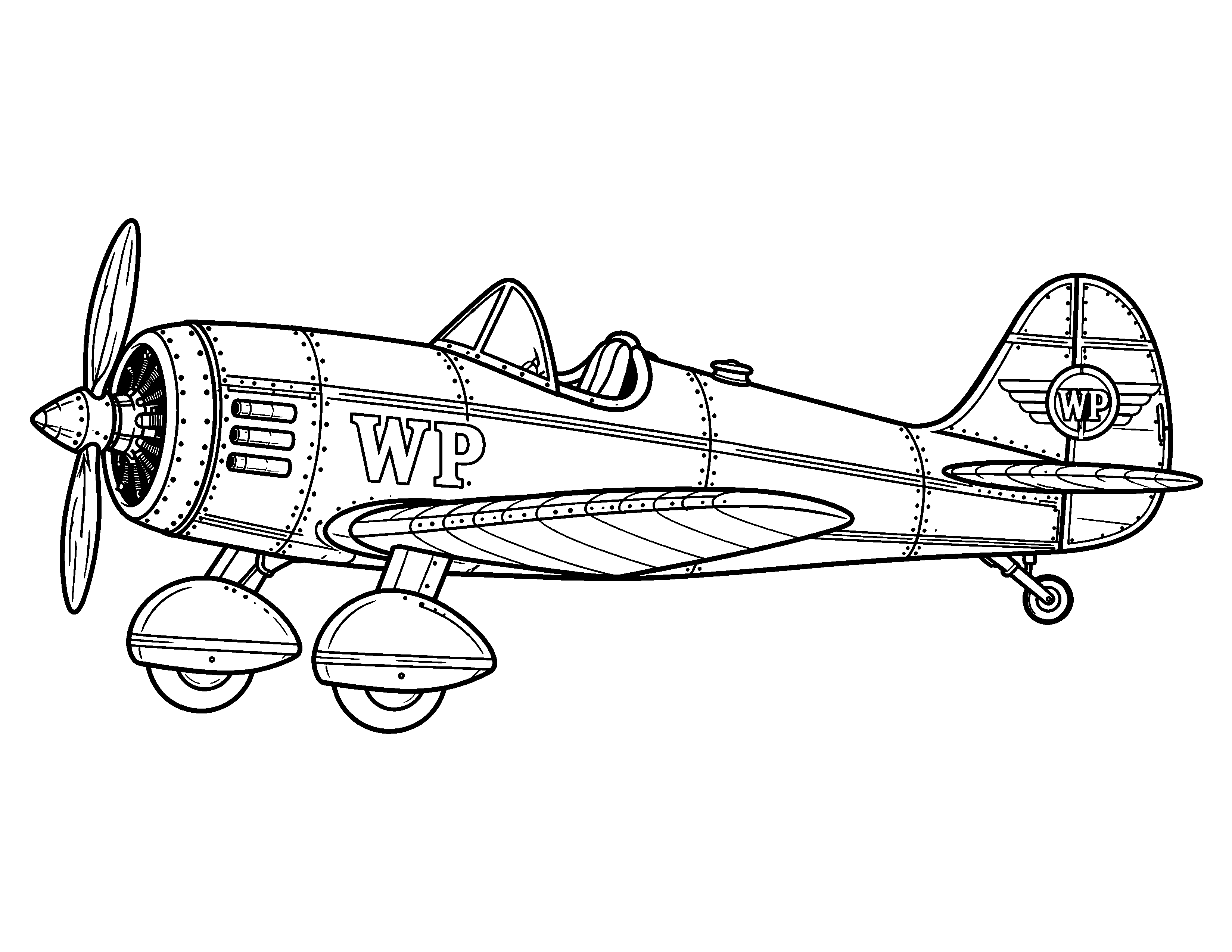
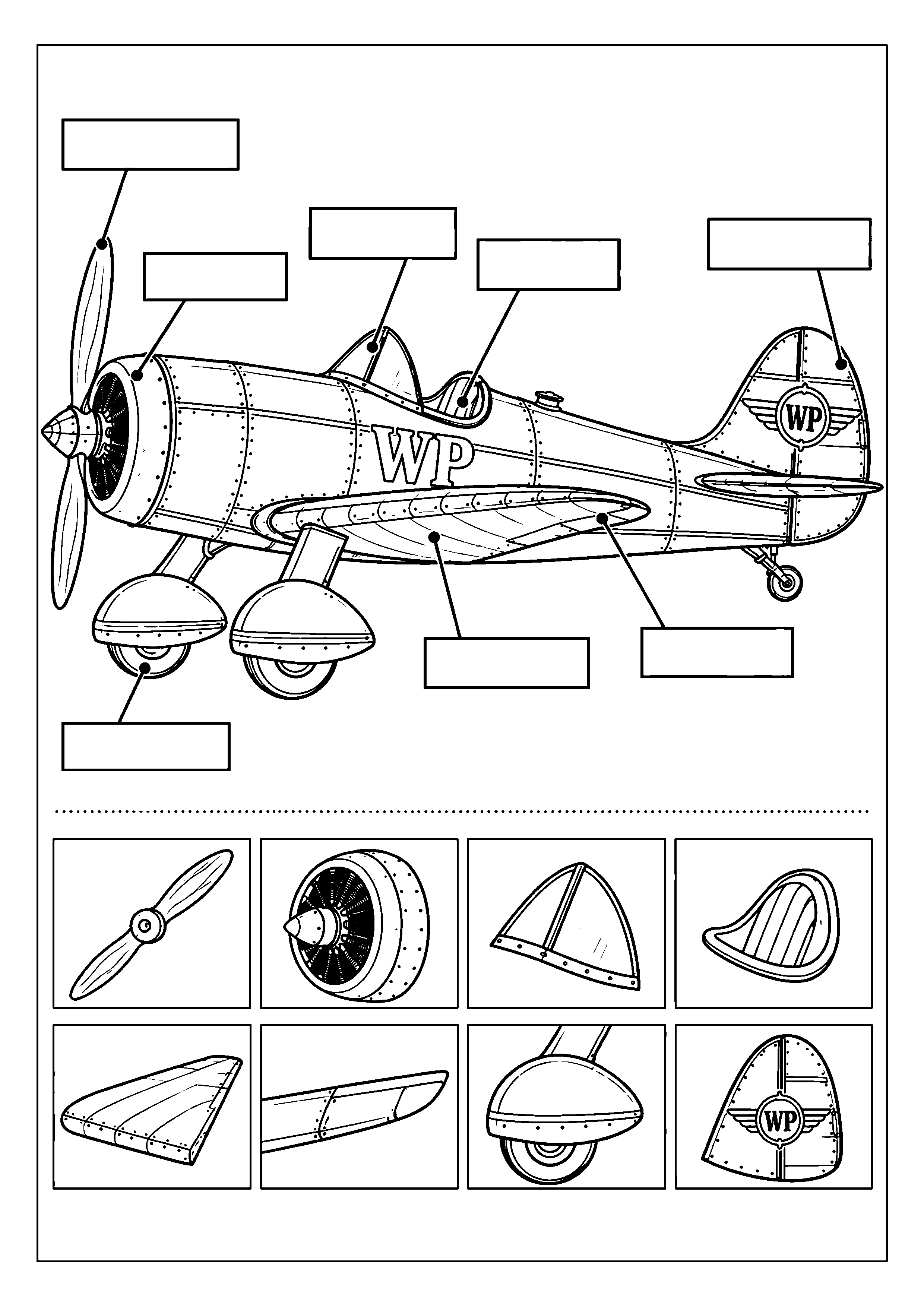
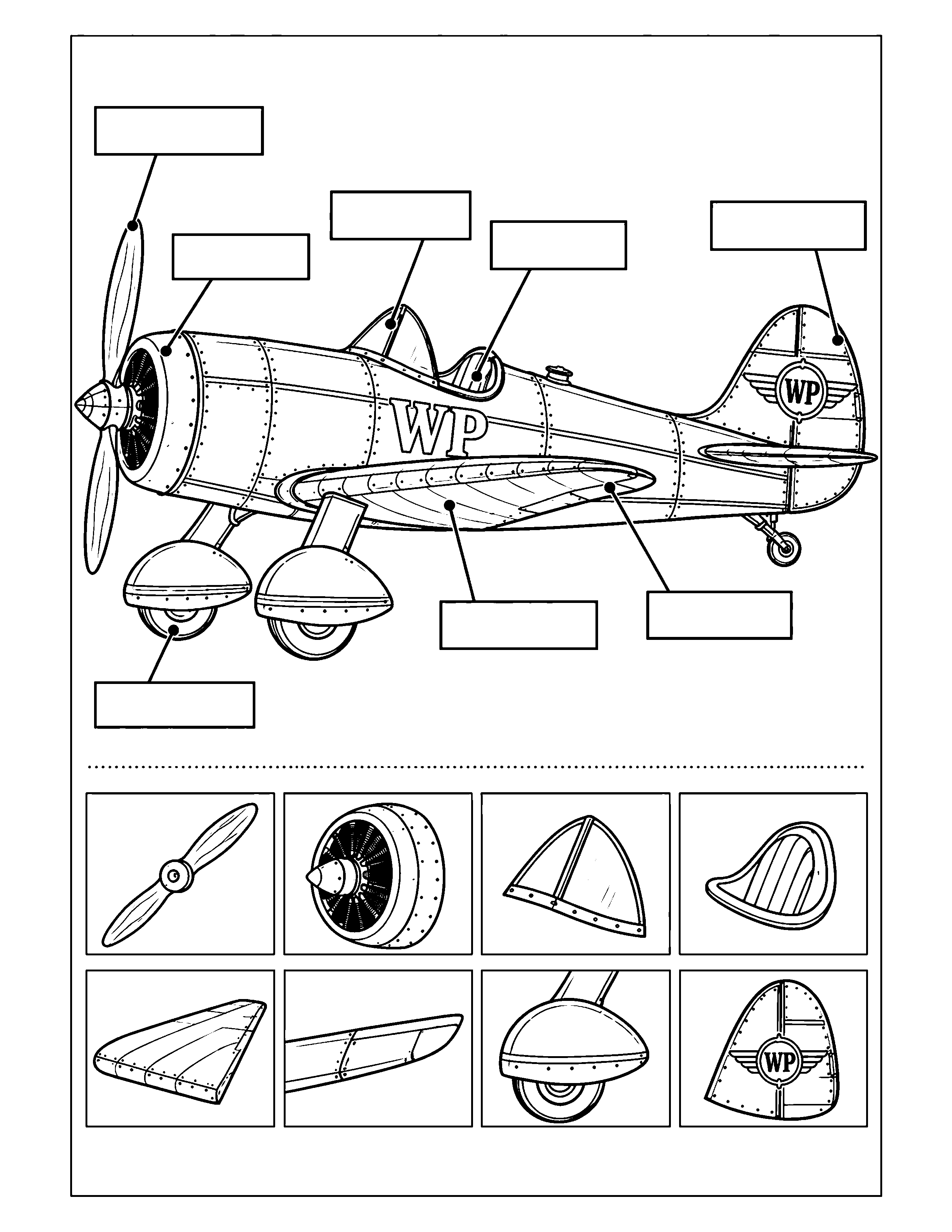
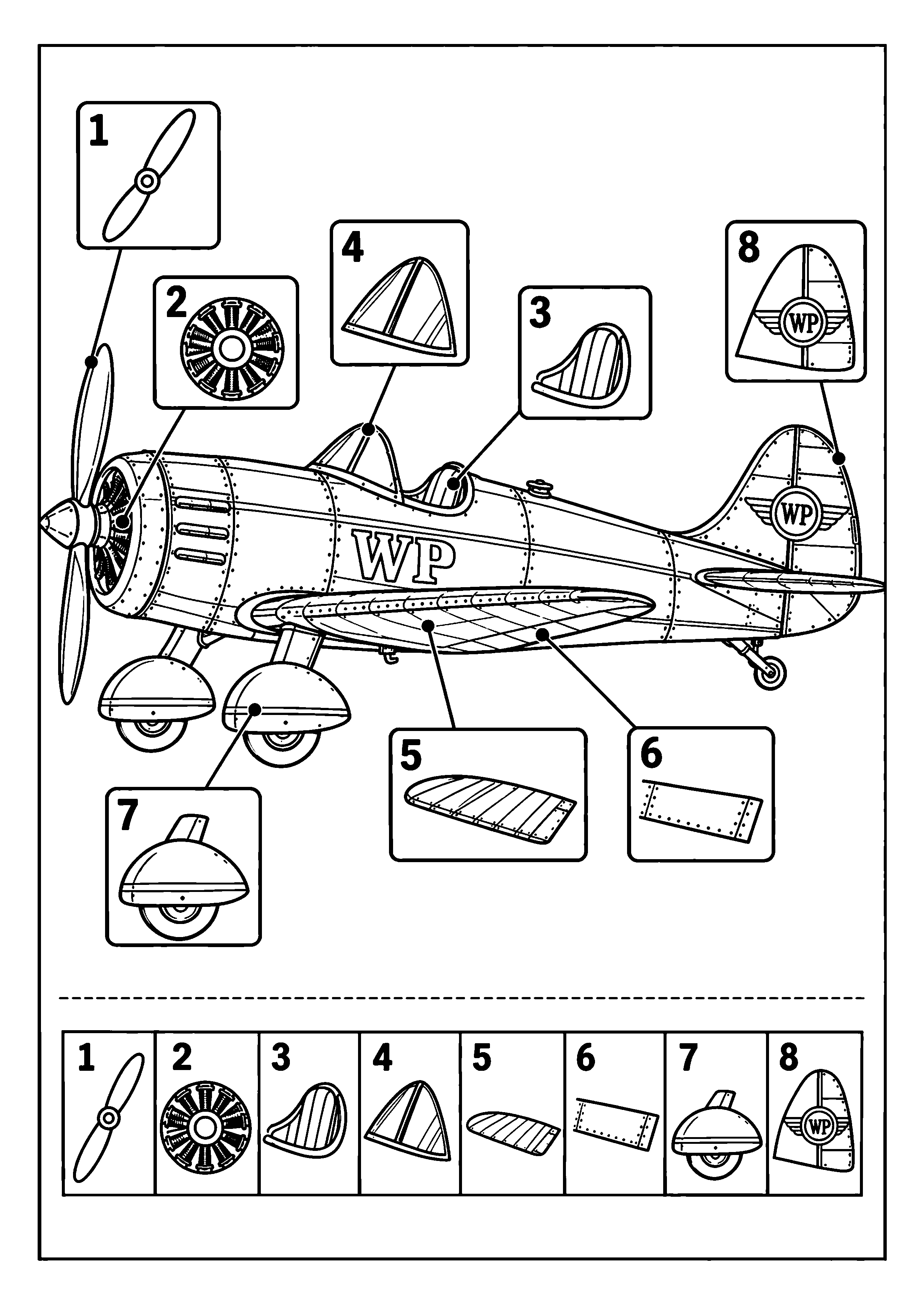
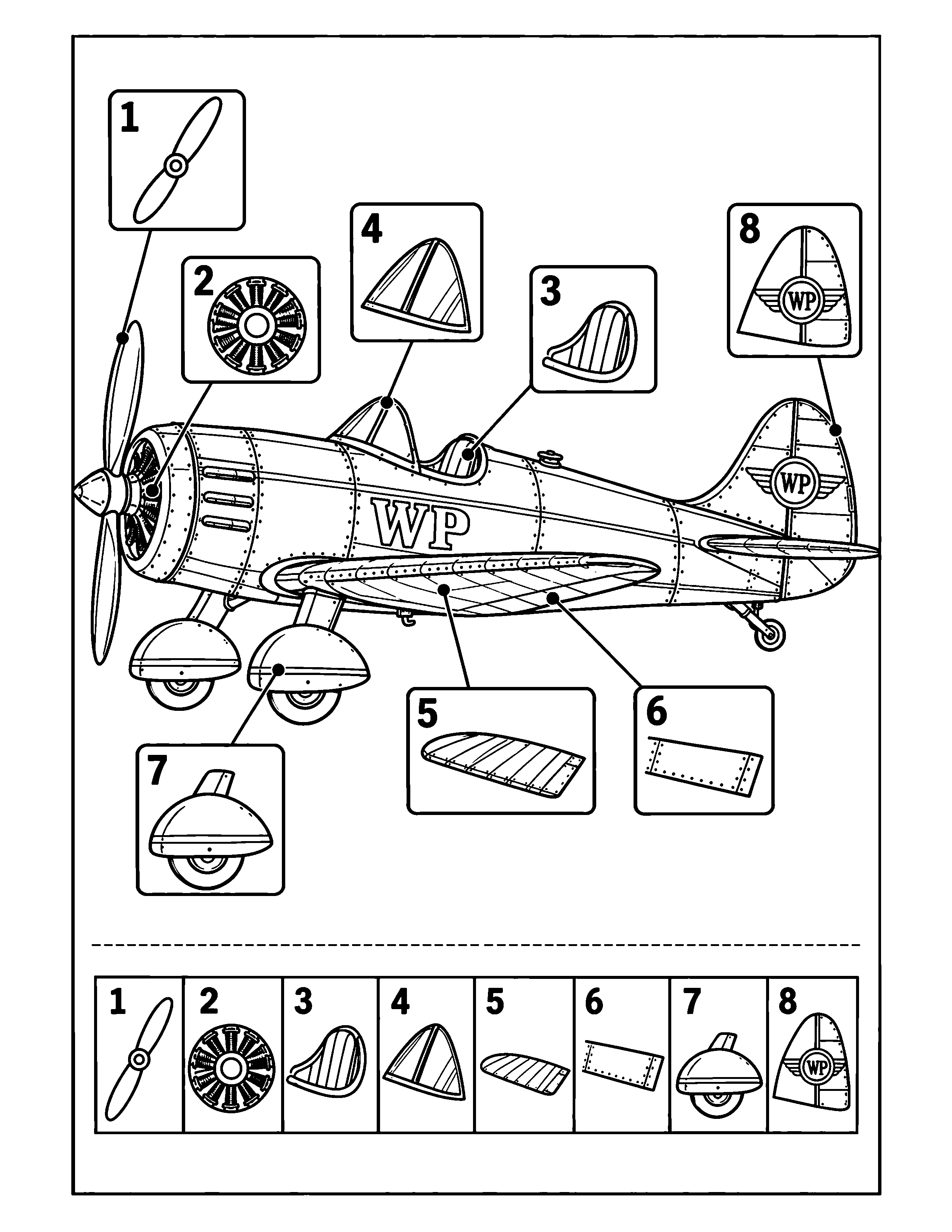
Turn on JavaScript to press the parts on the aeroplane. Here they are in words.
Propeller
The engine spins the propeller round and round, and each blade is like a little spinning wing that pulls the aeroplane forward.
Ours is a fixed-pitch propeller: its blade angle is set when it is made. Nobody goes near a propeller, even a still one.
Checked against: FAA Pilot's Handbook of Aeronautical Knowledge (FAA-H-8083-25C), Ch. 3 Aircraft Construction, The Powerplant, p. 3-7; Ch. 5, Basic Propeller Principles, p. 5-28; Ch. 7 Aircraft Systems, Fixed-Pitch Propeller, p. 7-5.
Spinner
The spinner is the smooth, pointed cap in the middle of the propeller, and it spins round with it.
Not every aeroplane has one. Pilots look it over in the walk-around. The PHAK does not cover spinners; the Airplane Flying Handbook does.
Checked against: FAA Airplane Flying Handbook (FAA-H-8083-3C), Ch. 2 Ground Operations, Preflight Assessment of the Aircraft, Engine and Propeller, p. 2-12.
Engine
Our engine's cylinders sit in a circle, like the spokes of a wheel, and inside each one fuel and air burn to push the propeller round.
A radial engine: a row of cylinders around the crankcase. Fins on each cylinder give the passing air more metal to cool.
Checked against: FAA Pilot's Handbook of Aeronautical Knowledge (FAA-H-8083-25C), Ch. 7 Aircraft Systems, Reciprocating Engines, pp. 7-2 to 7-3; Engine Cooling Systems, p. 7-17.
Cowling
The cowling is the smooth cover round the front of the engine, and it helps the air slide past and cool the hot engine.
It streamlines the air round the engine and ducts it over the cylinders. Ours is a brass ring round the front; the FAA has no separate word for the ring.
Checked against: FAA Pilot's Handbook of Aeronautical Knowledge (FAA-H-8083-25C), Ch. 3 Aircraft Construction, The Powerplant, p. 3-7; Ch. 7, Engine Cooling Systems, p. 7-17.
Windscreen
The windscreen is the little see-through window in front of the pilot, kept clean so the pilot can see clearly.
Before every flight pilots check it is clean and has no cracks. The PHAK names it but does not describe it; the Airplane Flying Handbook does.
Checked against: FAA Airplane Flying Handbook (FAA-H-8083-3C), Ch. 2 Ground Operations, Visual Preflight Assessment, p. 2-4.
Cockpit
The cockpit is where the pilot sits, with the stick, the pedals and the dials all within reach.
Ours is open, with no roof over it. The handbook's usual word is flight deck.
Checked against: FAA Pilot's Handbook of Aeronautical Knowledge (FAA-H-8083-25C), Glossary, Fuselage, p. G-13.
Fuel cap
The fuel cap is the lid on the fuel tank, and the pilot always checks it is on tight.
After every fill the caps go back on securely, and pilots check them in the walk-around.
Checked against: FAA Pilot's Handbook of Aeronautical Knowledge (FAA-H-8083-25C), Ch. 7 Aircraft Systems, Fuel Tanks, p. 7-25; FAA Airplane Flying Handbook (FAA-H-8083-3C), Ch. 2, Fuel and Oil, p. 2-9.
Fuselage
The fuselage is the aeroplane's body: the pilot sits inside it, and the wings and tail are joined on to it.
The central body. It carries the pilot and holds the wings and the tail together.
Checked against: FAA Pilot's Handbook of Aeronautical Knowledge (FAA-H-8083-25C), Ch. 3 Aircraft Construction, Fuselage, p. 3-3.
Wing
When the aeroplane rushes along, its wings push the air down and the air pushes the wings up, holding the aeroplane in the sky.
The main lifting surfaces. Ours is a low-wing monoplane: one wing each side, low on the body. We can see the left wing, the pilot's left.
Checked against: FAA Pilot's Handbook of Aeronautical Knowledge (FAA-H-8083-25C), Ch. 3 Aircraft Construction, Wings, pp. 3-3 to 3-4; Ch. 4 Principles of Flight, p. 4-7.
Aileron
The aileron is the little flap at the back of the wing, near the tip, and when one goes up the other goes down to tip the wings.
Ailerons roll the aeroplane about the line from nose to tail. Tipping the wings is what turns an aeroplane in the air.
Checked against: FAA Pilot's Handbook of Aeronautical Knowledge (FAA-H-8083-25C), Ch. 6 Flight Controls, Ailerons, p. 6-3; Ch. 5, Aerodynamics of Flight, Turns, p. 5-22.
Landing gear
The two big front wheels carry most of the aeroplane's weight on the ground, and on our aeroplane they stay down all the time.
Fixed landing gear: simple, always down. The brakes are on these wheels.
Checked against: FAA Pilot's Handbook of Aeronautical Knowledge (FAA-H-8083-25C), Ch. 3 Aircraft Construction, Landing Gear, p. 3-7; Ch. 7, Fixed and Retractable Landing Gear, p. 7-34.
Wheel spats
The spats are smooth covers over the wheels that help the air slip past, so the aeroplane flies a little faster.
Covers that reduce drag. They hide the tyres, so pilots look underneath them in the walk-around.
Checked against: FAA Airplane Flying Handbook (FAA-H-8083-3C), Ch. 2 Ground Operations, Landing Gear, Tires, and Brakes, p. 2-10; FAA Pilot's Handbook of Aeronautical Knowledge (FAA-H-8083-25C), Ch. 11 Aircraft Performance, p. 11-25.
Tailplane
The tailplane is the small flat wing at the back, and it gently pushes the tail down so the nose does not tip forward, like a see-saw.
It usually pushes down, not up, to balance an aeroplane that is a little nose-heavy.
Checked against: FAA Pilot's Handbook of Aeronautical Knowledge (FAA-H-8083-25C), Ch. 3 Aircraft Construction, Empennage, p. 3-6; Ch. 5, Longitudinal Stability, p. 5-16.
Elevator
The elevator is the hinged flap at the back of the tailplane, and tilting it points the aeroplane's nose up or down.
It controls pitch. Whether the aeroplane then climbs also depends on the engine's power and the speed.
Checked against: FAA Pilot's Handbook of Aeronautical Knowledge (FAA-H-8083-25C), Ch. 3 Aircraft Construction, Empennage, p. 3-6; Ch. 6 Flight Controls, Elevator, p. 6-5.
Fin
The fin stands up tall on the tail and, like the feathers on an arrow, helps the aeroplane fly straight.
It keeps the nose pointing into the wind, the way a weather vane does.
Checked against: FAA Pilot's Handbook of Aeronautical Knowledge (FAA-H-8083-25C), Ch. 3 Aircraft Construction, Empennage, p. 3-6; Ch. 5, Directional Stability, p. 5-19.
Rudder
The rudder is the flap at the back of the fin, and it swings left or right to swing the aeroplane's nose left or right.
It yaws the nose. On its own it does not turn the aeroplane in the air: the pilot tips the wings to turn and uses the rudder to keep the turn smooth. On the ground the pedals steer.
Checked against: FAA Pilot's Handbook of Aeronautical Knowledge (FAA-H-8083-25C), Ch. 6 Flight Controls, Rudder, p. 6-8; Ch. 5, Turns, pp. 5-22 to 5-23.
Tail wheel
The little tail wheel at the very back holds up the tail and helps the pilot steer on the ground.
A tailwheel aeroplane sits nose-up on the ground, so it is hard to see straight ahead while taxiing.
Checked against: FAA Pilot's Handbook of Aeronautical Knowledge (FAA-H-8083-25C), Ch. 3 Aircraft Construction, Landing Gear, p. 3-7; Ch. 7, Tailwheel Landing Gear, pp. 7-33 to 7-34.